
Barrier Island Landscaping for Treasure Island
Salt from both sides. Sand instead of soil. Wind that never stops. Treasure Island is the hardest place to landscape in Pinellas County. We know how to build yards that survive it — and we have the barrier island track record to prove it.
Landscaping on a Sand Bar Between Two Bodies of Salt Water
Treasure Island is not Clearwater. It is not even close. Clearwater gets Gulf salt from one side. Treasure Island gets it from two — the Gulf of Mexico to the west and Boca Ciega Bay to the east. There is no escaping the spray regardless of which way the wind blows.
The "soil" on Treasure Island is beach sand. Pure, nutrient-free, fast-draining sand that holds almost no moisture and provides almost no root support. The water table sits close enough to the surface that tidal cycles push brackish moisture up through the sand during high tide events.
Add constant wind that desiccates foliage, hurricane exposure with no inland buffer, and limited access via two bridges that affect material delivery and crew scheduling — and you have the most challenging landscaping environment in our entire service area.
We do not say this to scare you. We say it because if you hire a mainland landscaper who does not account for these conditions, you will be replacing your landscape within a year. We design specifically for barrier island survival, and our Treasure Island installs prove it.
Landscaping That Runs Itself Between Guests
Treasure Island has one of the highest concentrations of vacation rentals in Pinellas County. Beach cottages, condos, duplexes — a huge portion of the island is managed by property managers or owners who are not on-site to water, weed, or maintain anything between guest turnovers.
The landscaping for these properties needs to do three things: look great in listing photos, survive total neglect for weeks at a time, and require zero interaction from guests or cleaning crews.
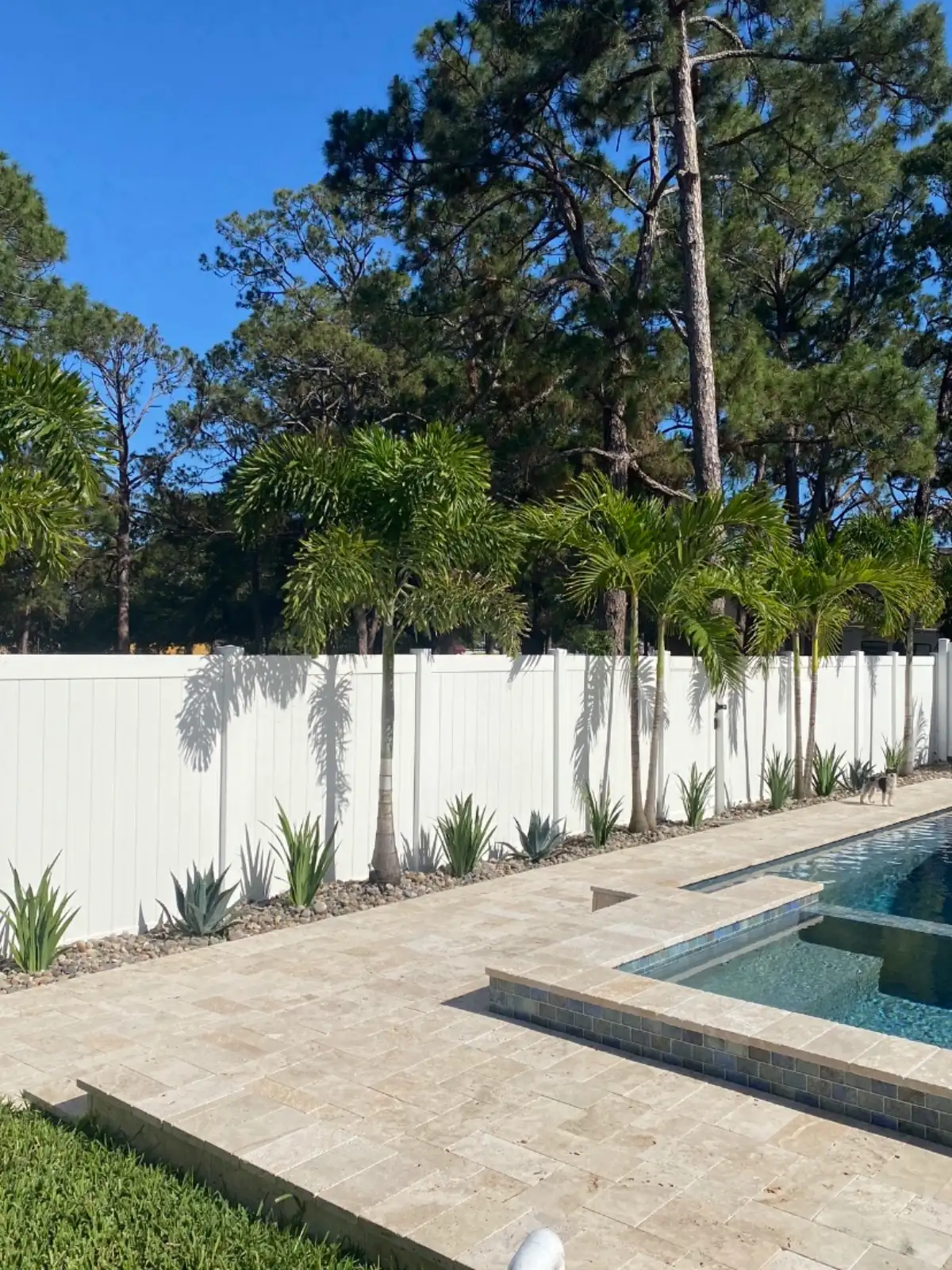
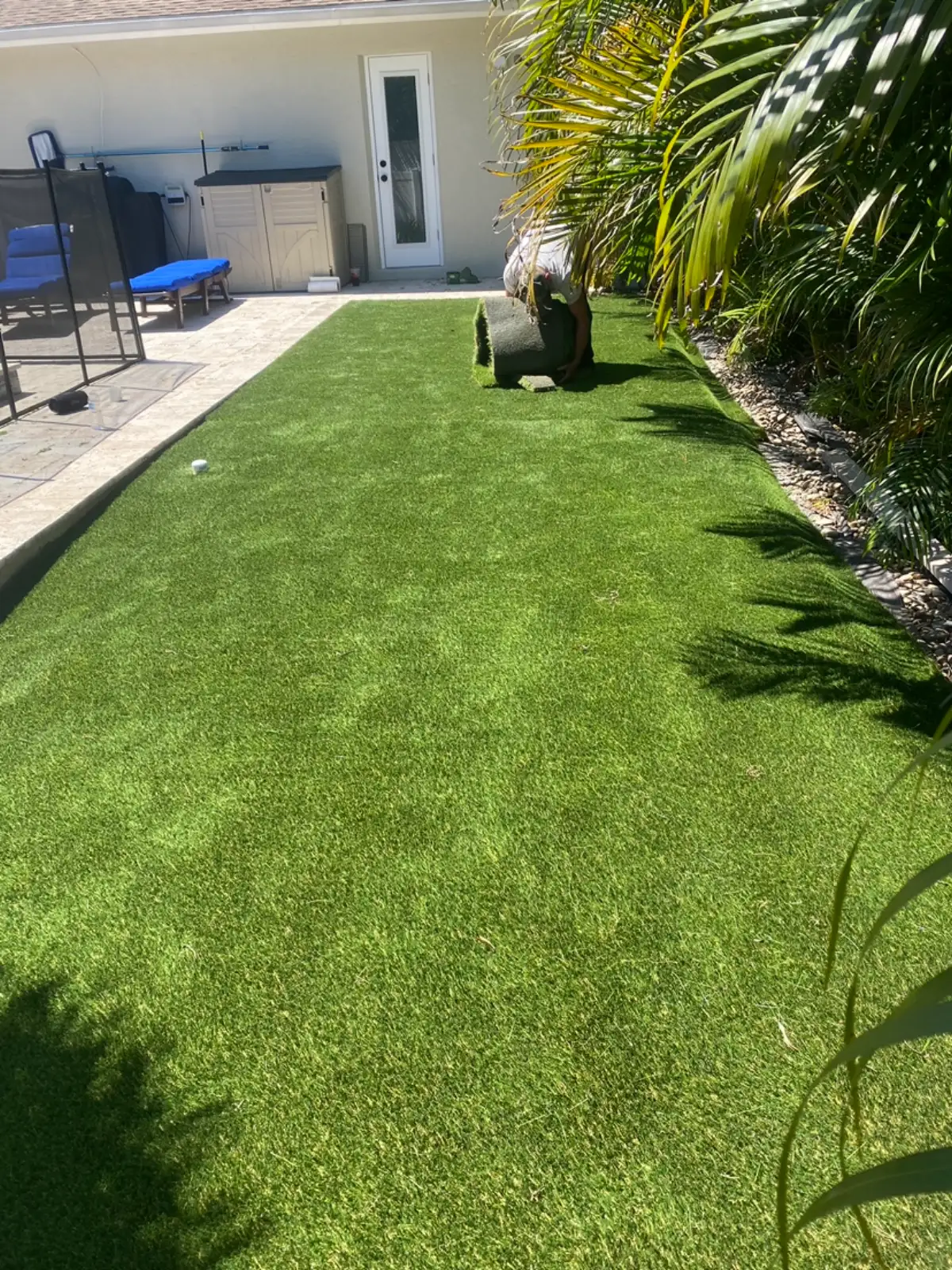
Our rental property packages are built around those requirements. Artificial turf in side yards and courtyard areas eliminates mowing and watering entirely. Drought-tolerant native beds along the foundation handle salt and sun without irrigation during dry spells. Decorative rock mulch replaces wood mulch that blows away in wind or gets kicked around by guests. Timer-controlled drip irrigation on planted areas runs on a set-it-and-forget-it schedule.
The result: a property that looks like the listing photos every single turnover, whether the owner visited last week or last season. We work with over a dozen rental property managers on Treasure Island who can confirm that approach works.
Island Zones We Know
Treasure Island is a small community, but conditions vary meaningfully from one end to the other. Here is how we approach different parts of the island.
Sunset Beach (Southern Tip)
Maximum Gulf exposure. Properties on the southern end face direct open-water wind and salt with no buildings or vegetation to buffer it. Plant selection here is limited to the hardiest coastal natives — Sea Grape, Sabal Palmetto, Dune Sunflower, and Beach Elder. Hardscape materials must be non-corrosive: composite, powder-coated aluminum, or marine-grade stainless. We use more decorative rock and artificial turf in Sunset Beach than anywhere else on the island.
Causeway Boulevard / Central Island
The Treasure Island Causeway brings bridge traffic and is the main artery for material delivery. Properties along Causeway Boulevard and the central residential streets have slightly more protection from direct Gulf wind thanks to the density of structures. This allows a slightly wider plant palette — Silver Buttonwood, Simpson Stopper, Muhly Grass — alongside the standard coastal natives.
Isle of Capri
A small pocket at the northwest end of Treasure Island near Johns Pass. Properties here face both Gulf exposure to the west and the tidal pass to the north. Salt, current-driven sand deposits, and storm surge all factor into landscape design. Retaining structures and elevated planting beds are common solutions to keep soil and root zones above surge level.
Paradise Island / Bay Side
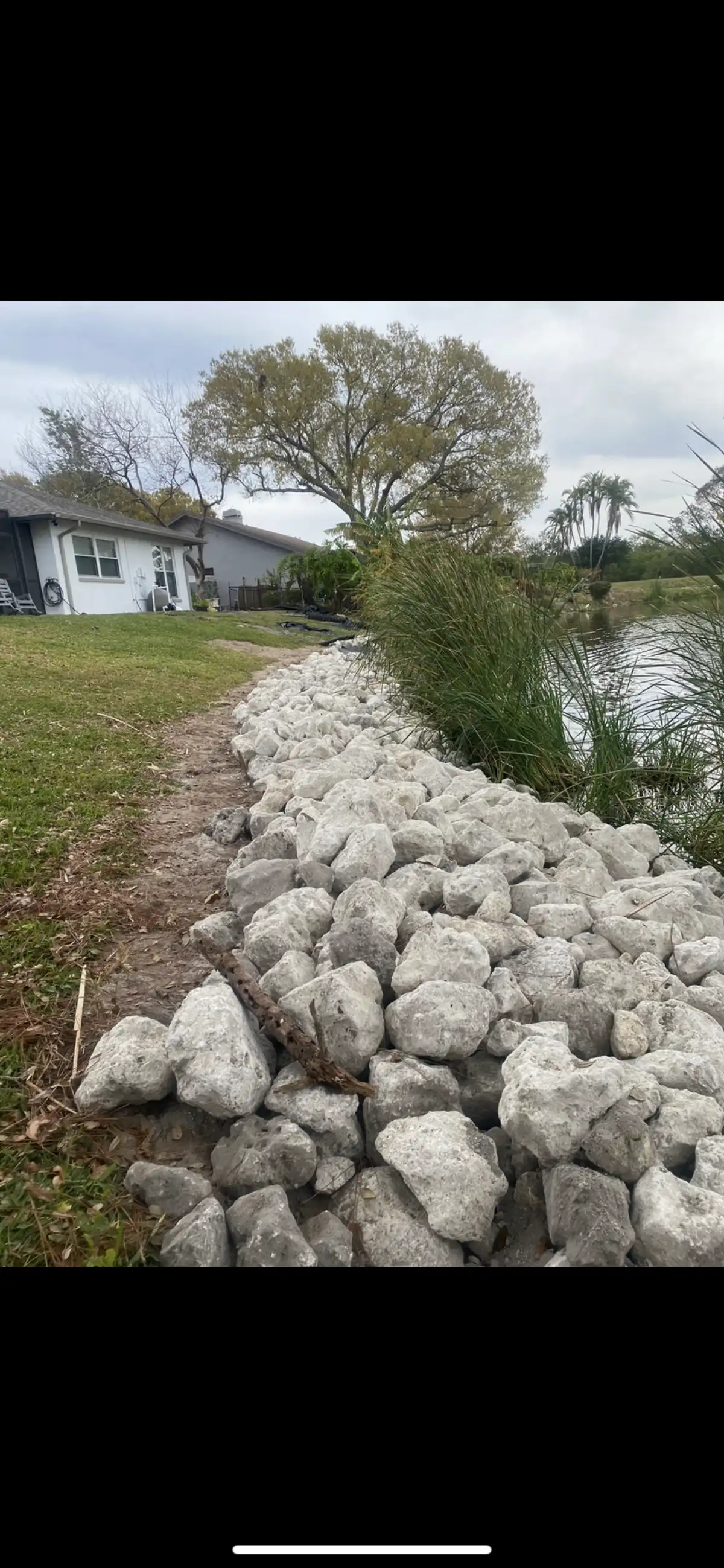
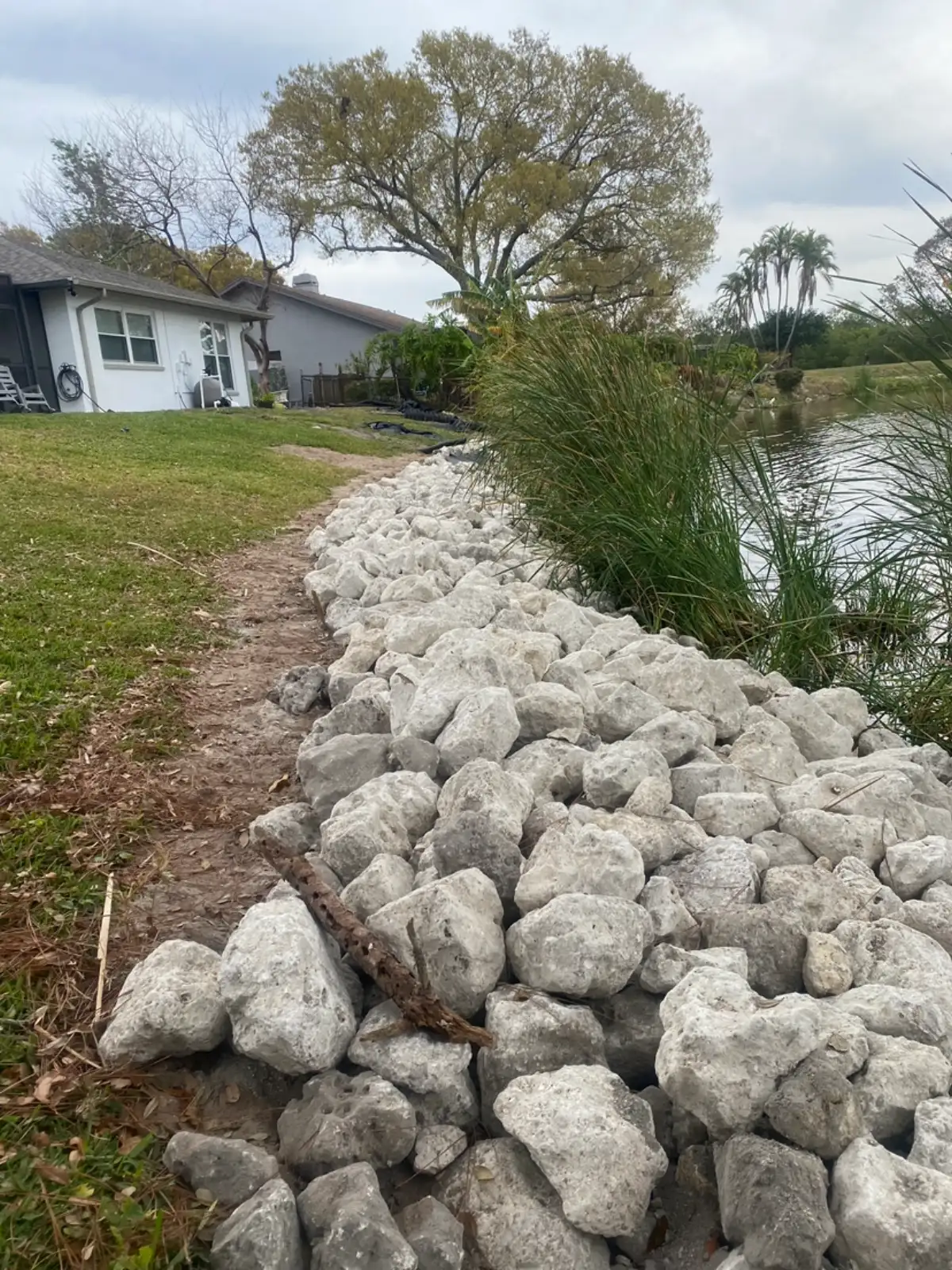
The eastern (bay) side of Treasure Island is sheltered from direct Gulf wind but still gets salt from Boca Ciega Bay. These properties generally support slightly more diverse plantings than Gulf-facing lots. Waterfront homes on the bay side deal with boat wake erosion along seawalls — we reinforce with riprap and native shoreline plantings to stabilize the bank behind the wall.
Sunset Beach: Zero-Maintenance Rental Conversion
A property manager called us about a 4-unit beach cottage complex on the southern tip of Treasure Island. The existing landscaping — planted by the previous owner with mainland species — had died almost completely. The Ligustrum hedges were brown. The St. Augustine turf was 70 percent bare sand. The remaining Bird of Paradise plants had salt-burned leaves curling inward.
The property manager's requirement was simple: "I never want to think about the landscaping again."
We removed everything. In the courtyard between units, we installed 600 square feet of artificial turf with proper drainage base. Foundation beds were replanted with Coontie (zero maintenance once established), Fakahatchee Grass, and Dune Sunflower. All mulch was replaced with 3-inch river rock over landscape fabric. A 4-zone drip irrigation system on a WiFi timer handles the planted beds.
Total project: 6 days for all 4 units. The property manager has not called us about maintenance in 14 months. The listing photos show green, clean, professional landscaping year-round.
What Treasure Island Property Owners Need
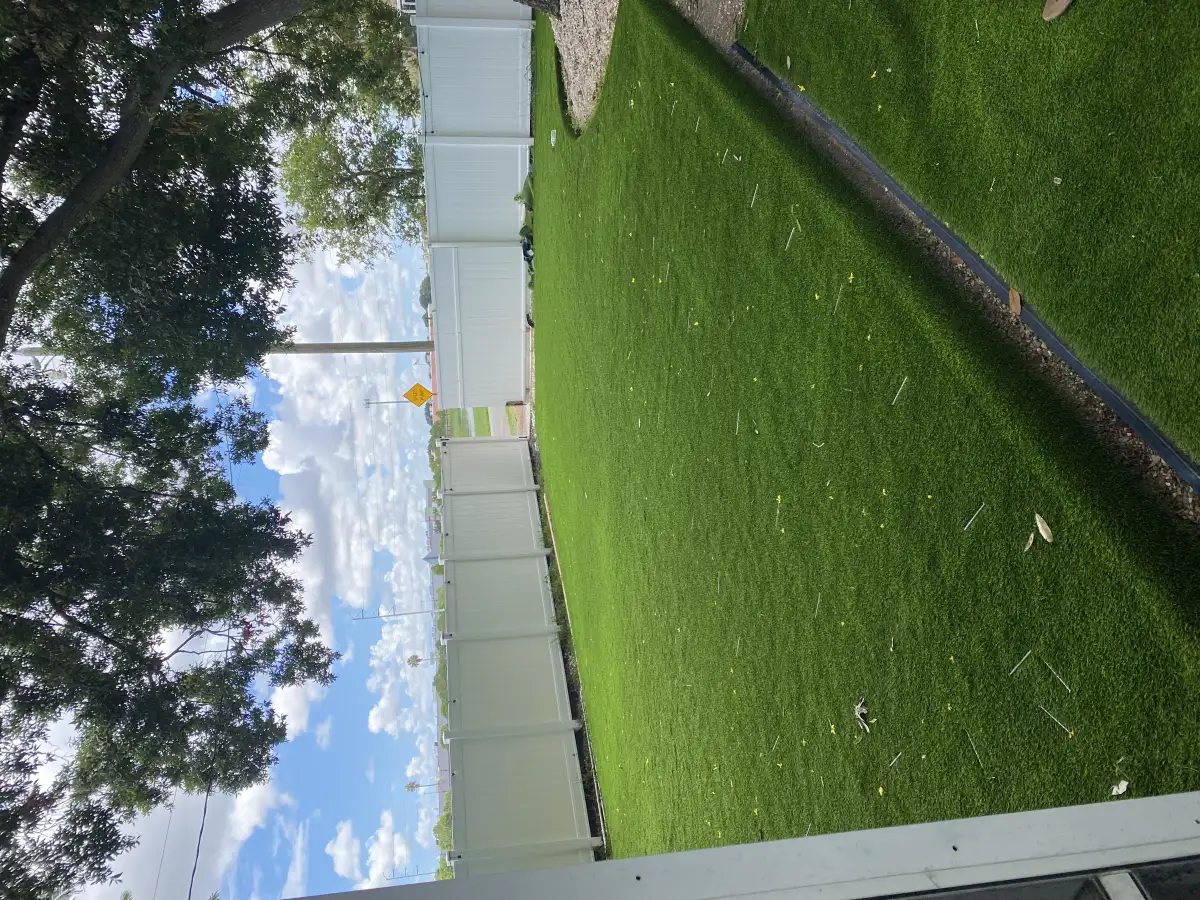
Artificial Turf
Zero-maintenance turf for rentals, condos, and courtyards. No mowing, no watering, always listing-ready. UV-stabilized for island sun exposure.
Learn More →
Salt-Native Planting
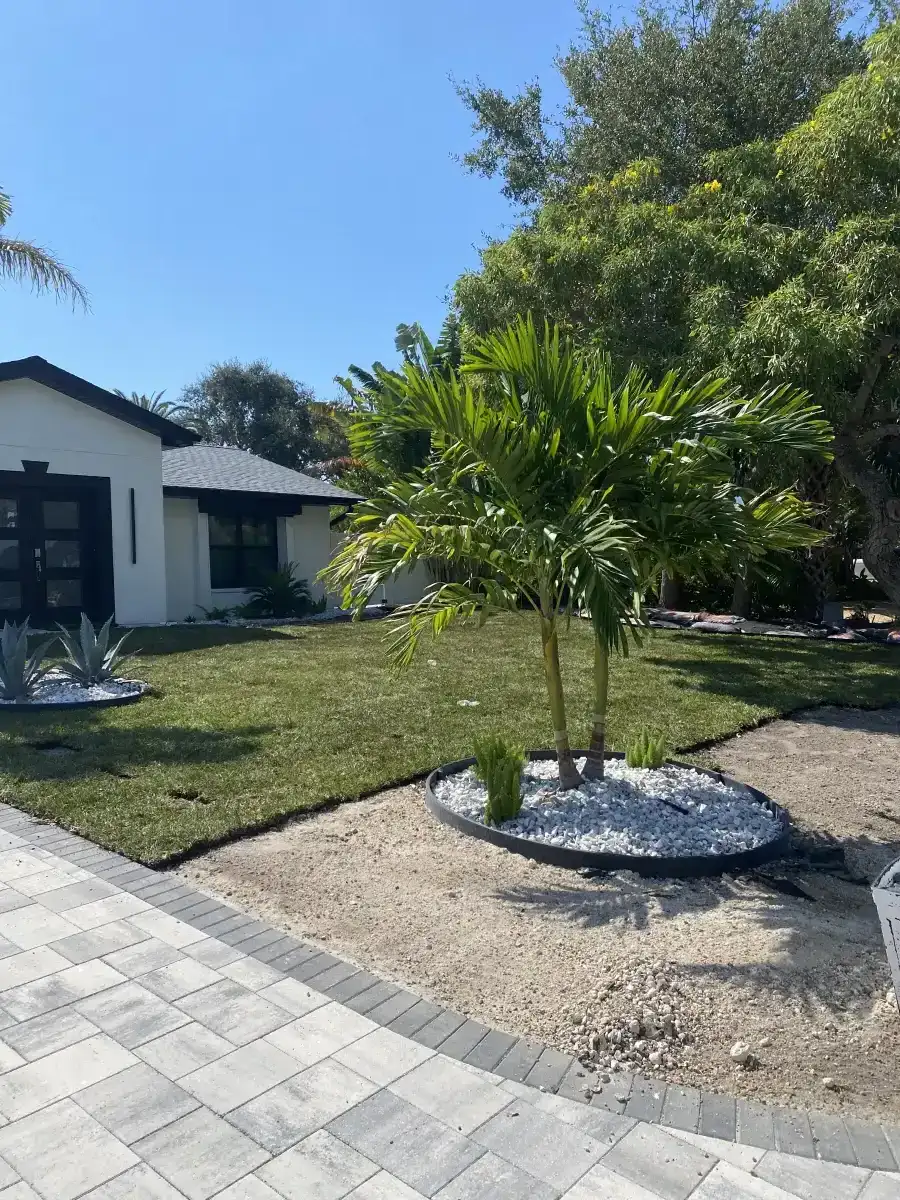
Sea Grape, Coontie, Muhly Grass, Silver Buttonwood — barrier island species that thrive in sand and salt without babysitting.
Learn More →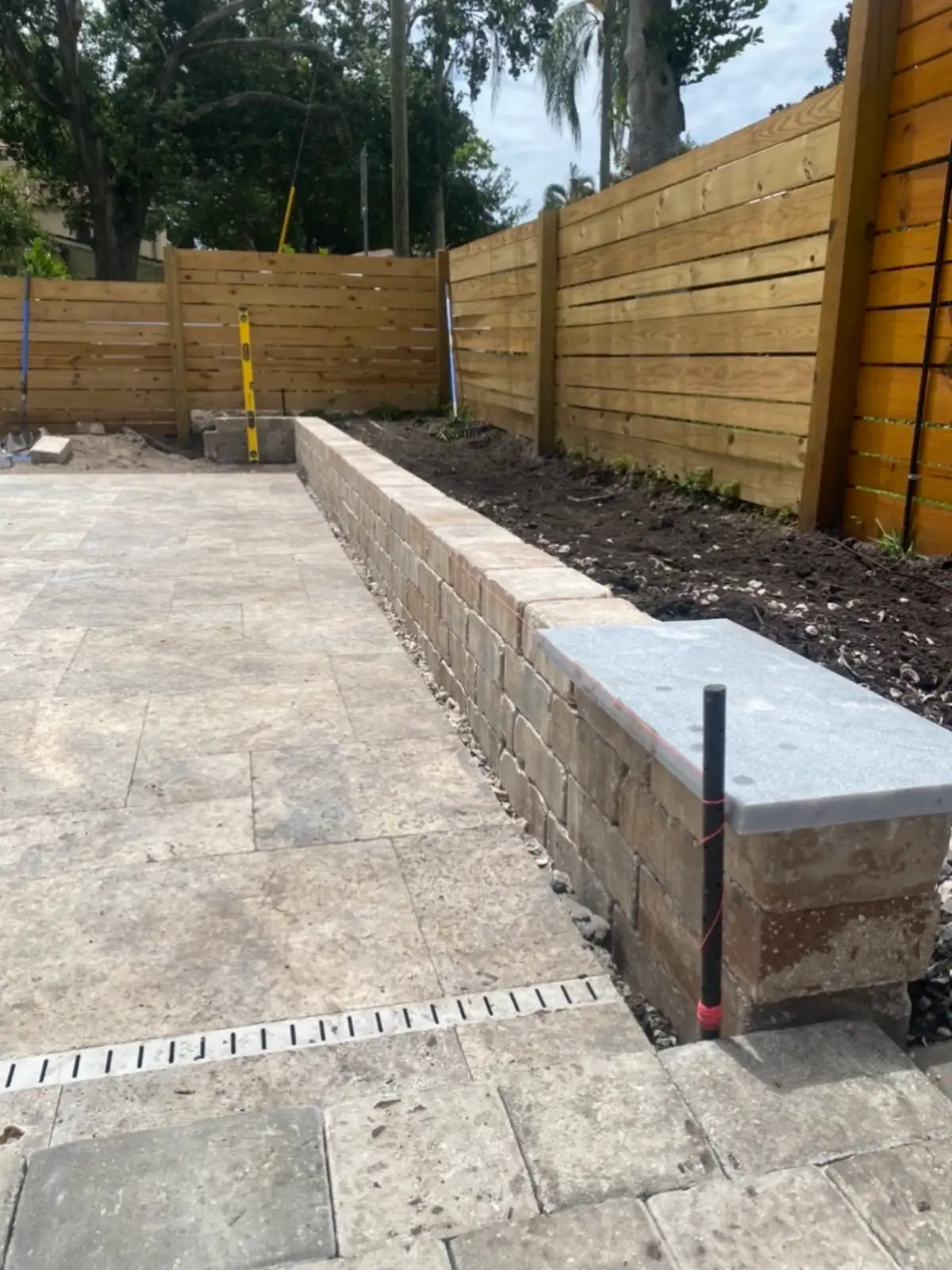
Coastal Hardscaping
Pavers, walkways, and retaining structures in salt-rated materials. No rusting, no spalling, no replacement in 3 years.
Learn More →We Plan Around the Bridges So You Do Not Have To
Treasure Island's bridge access is a real factor in project scheduling. The Treasure Island Causeway from St. Petersburg and the Johns Pass Bridge from Madeira Beach both have peak traffic windows that can delay material trucks and crew vehicles by 20 to 30 minutes during season.
We have been doing this long enough to plan around it. Material deliveries are scheduled for early morning before 7 AM or mid-morning after the commuter window clears. For multi-day projects, we stage all materials on-site on Day 1 to eliminate repeated bridge crossings.
Our St. Petersburg headquarters is roughly 15 to 20 minutes from most Treasure Island addresses via the Causeway — outside of peak season traffic. No travel surcharge, no island premium on our labor rates.
Ready to Landscape the Hardest Island in Pinellas?
Whether you own a rental that needs a set-and-forget landscape, or you live full-time on Treasure Island and want a yard that actually survives, we have the barrier island experience to make it happen. Free estimates with honest assessment of what your property needs.
Get Your Free EstimateTreasure Island Landscaping Questions
Treasure Island is a barrier island surrounded by salt water on both sides — the Gulf of Mexico to the west and Boca Ciega Bay to the east. Every plant on the island gets salt exposure from both directions. The soil is almost pure beach sand with virtually no organic content. Wind exposure is constant and intensifies during storms. Bridge access means scheduling around traffic patterns and material delivery logistics. These combined factors make Treasure Island the most demanding landscaping environment in our entire service area.
Rental properties need maximum visual impact with zero maintenance between guests. Our rental packages typically include artificial turf in side yards and courtyard areas, drought-tolerant native planting beds along foundations, decorative rock mulch instead of wood mulch that blows away, and timer-controlled drip irrigation. The result is a property that photographs well for listings and never looks neglected regardless of guest turnover schedule.
Yes — with the right species and soil preparation. Dune Sunflower, Sea Oats, Muhly Grass, Coontie, Silver Buttonwood, and Sea Grape all thrive in pure sand with salt exposure. For turf, we amend the top 4 to 6 inches of sand with composted pine bark and slow-release organic matter before laying sod. This gives roots something to grab while the organic layer slowly improves the soil structure over time.
We design for hurricane conditions from the start. Low-profile groundcovers instead of tall ornamental grasses in exposed locations. Wind-rated palm species like Sabal Palmetto that flex rather than snap. No loose stone or gravel mulch that becomes projectile in high winds. Deep-set hardscape installations that resist uplift. After a storm, we prioritize debris removal and assess damage for insurance documentation.
It can. The Treasure Island Causeway and the Johns Pass Bridge both have peak traffic windows that affect material delivery and crew arrival. We schedule deliveries for early morning before 7 AM or mid-morning after 9 AM to avoid the commuter window. For multi-day projects, we stage materials on-site on Day 1 to avoid repeated bridge crossings. This planning keeps your project on schedule regardless of bridge traffic.