

Complete Lawn and Planting Transformations
Sod, shrubs, mulch beds, decorative rock, ornamental grasses, ground covers — everything that makes a yard feel alive. Designed for Florida's sun, salt, and storms from the ground up.
What Softscaping Actually Means (and Why It Matters More Than Hardscape)
Hardscaping gives you structure. Softscaping gives you life. Every paver patio, every retaining wall, every driveway extension still looks industrial without the plants, mulch, and lawn that frame it. Softscaping is the 60 to 70 percent of your landscape that determines whether your property feels warm and inviting or cold and unfinished.
In Florida, softscaping is also where most homeowners fail. They plant what they remember from up north. They choose based on the pretty picture on the nursery tag without reading the hardiness zone. They install mulch one inch deep and wonder why weeds dominate within 90 days. They skip irrigation for the first three months and lose $2,000 in plant material to our August heat.
We do softscaping differently. Every plant we install is selected for Pinellas County's zone 10a climate, salt exposure level, soil pH, and specific sun conditions on your lot. Every mulch bed gets proper depth. Every planting gets root-zone irrigation for establishment. The result is a landscape that gets better every year instead of declining every month.
Our Turf and Softscape Services
We handle everything between the hardscape and the sky. Here is what falls under our softscape umbrella:
Lawn Installation and Renovation
Whether you need a complete new lawn or a targeted renovation of dead and thin areas, we handle the full process: old turf removal, soil testing, amendment, grading, variety selection, and installation. We work with St. Augustine (Floratam, Palmetto, CitraBlue), Zoysia (Empire, Geo), Bermuda (Celebration, Tifway 419), and Bahia.
Renovation is not just laying sod on top of bad soil. If the old lawn died, there is a reason — disease, nematodes, shade, compaction, irrigation gaps, or wrong grass for the conditions. We identify and fix the cause before investing in new turf. Otherwise you are just buying the same failure again.
Starting at $1/sqft for sod installation with full soil prep
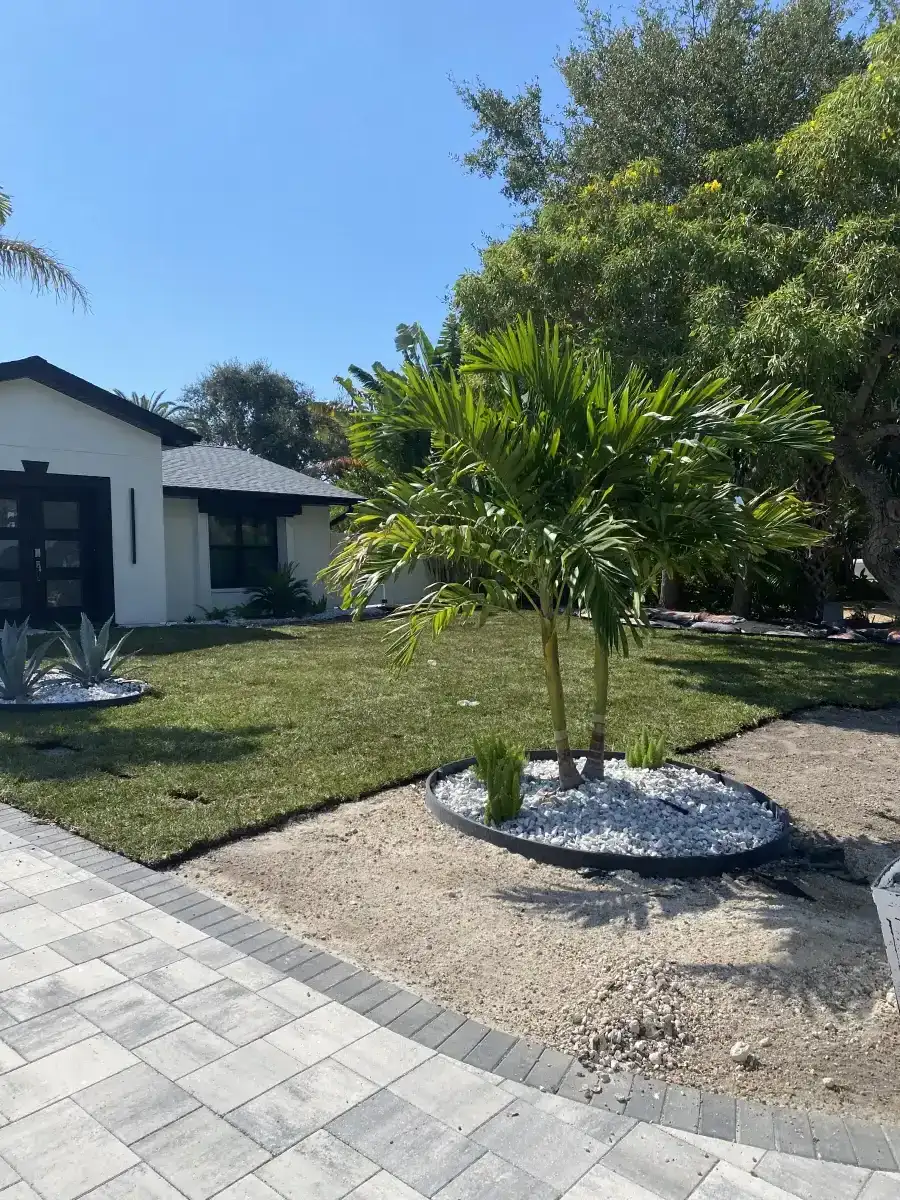
Shrub and Ornamental Plant Installation
Shrubs create the foundation layer of any landscape — they provide year-round structure, privacy screening, foundation softening, and visual anchoring. We select based on your specific conditions:
- Full sun, salt-tolerant: Green island ficus, Simpson stopper, sea grape, Walter viburnum
- Shade-tolerant: Cardboard palm, coontie, cast iron plant, peace lily (protected areas)
- Flowering: Firebush, plumbago, ixora, jatropha, hibiscus
- Privacy screening: Podocarpus, clusia, areca palm, bamboo palm
- Low-growing foundation: Dwarf ixora, dwarf yaupon holly, Indian hawthorn, dwarf schefflera
Every plant is installed with root ball prep, proper depth (crown at grade — never buried), backfill with amended soil, mulch ring, and irrigation verification. We guarantee establishment when our watering schedule is followed.
Ornamental Grasses
Ornamental grasses add movement, texture, and height without the maintenance demands of flowering plants. In Pinellas County, grasses handle our wind, salt, and drought better than most broadleaf ornamentals. Our favorites:
- Muhly grass: Pink plumes October through December, 3 to 4 feet tall, zero irrigation once established
- Dwarf fakahatchee grass: Evergreen, fine-textured, 2 to 3 feet, works as single specimen or massed
- Fountain grass (purple): Dramatic burgundy foliage, 3 to 4 feet, fast-growing
- Liriope (mondo grass): 6 to 12 inches, perfect border edging, shade-tolerant
- Pampas grass: 6 to 10 feet, massive plumes, works as standalone focal point
We use grasses as transitions between lawn and planting beds, as mass plantings that replace hard-to-mow slopes, and as privacy screens that move naturally in wind rather than creating a static wall.

Mulch Beds — Designed and Installed
Mulch is not just "brown stuff between plants." Properly designed mulch beds define planting areas, suppress weeds (80 to 90 percent reduction at 3-inch depth), retain soil moisture (reducing irrigation 20 to 30 percent), insulate roots from Florida's 95-degree summer soil temperatures, and decompose into organic matter that feeds your plants.
Our mulch options:
- Pine bark mini-nuggets: Best for beds with frequent planting changes — moves easily, decomposes slowly
- Eucalyptus mulch: Natural insect deterrent, stays put in rain better than pine, medium decomposition
- Red cedar mulch: Longest-lasting natural option (12 to 14 months), termite-resistant, natural color
- Florida-made recycled hardwood: Most affordable, 8 to 10 months between refreshes
We install at consistent 3-inch depth with proper bed edging (aluminum or plastic) to prevent mulch from migrating into lawn areas during rain — a common problem when beds are installed without borders.

Decorative Rock and Stone
Decorative rock is the permanent alternative to mulch — it never decomposes, never floats away in rain, never needs annual replacement, and never harbors termites or carpenter ants. For areas where you want zero maintenance, rock is the answer.
Popular options for Pinellas County landscapes:
- River rock (1-3 inch): Smooth, natural tones, excellent for dry creek beds and accent areas
- Mexican beach pebble: Dark, polished look, premium option for modern landscapes
- Shell rock: Local material, neutral white/cream, reflects heat (use away from foundations)
- Lava rock: Lightweight, good drainage, retains some moisture for adjacent plants
- Granite chip: Angular, stays in place on slopes better than round stone, many color options
Every rock installation gets a commercial-grade landscape fabric beneath to prevent weed growth and prevent stone from sinking into sandy soil over time. We calculate volume accurately — rock is expensive to over-order and difficult to remove if too much is placed.

Ground Cover Installation
Ground covers replace grass in areas where lawn simply will not thrive — deep shade under oaks, steep slopes too dangerous to mow, narrow side yards where mower access is impossible, or areas where you simply do not want to maintain turf.
Florida ground cover options:
- Perennial peanut: Looks like a mini-clover lawn, yellow flowers, nitrogen-fixing, takes light foot traffic
- Asiatic jasmine: Dense evergreen coverage in full shade, zero mowing, minimal water once established
- Sunshine mimosa: Purple puff-ball flowers, attracts butterflies, handles drought and some traffic
- Blue daze: Silvery foliage, blue flowers year-round in full sun, 6 to 12 inches tall
- Confederate jasmine (on ground): Fragrant white flowers in spring, evergreen, can cover large areas quickly
We install from plugs (2-inch pots on 12-inch centers) for budget-conscious coverage or from gallon containers (18-inch centers) for faster fill. Typical fill time: 4 to 8 months from plugs, 2 to 4 months from gallons in Florida's growing conditions.

Why Plant Selection Matters More in Florida Than Anywhere Else
In temperate climates, most nursery plants survive. In Florida, the wrong plant in the wrong spot dies within 6 months. Here is why selection is critical in Pinellas County:
Salt Exposure Varies by Block
A property 2 blocks from the Gulf gets measurable salt spray that kills azaleas, hydrangeas, and most non-native ornamentals within one season. A property 10 blocks inland does not. We assess your actual salt exposure — not just your zip code — and select accordingly. Shore juniper thrives where boxwoods melt. Sea grape flourishes where crape myrtles struggle. The difference is knowledge of your specific microclimate.
Sun/Shade Changes Through the Year
Florida's low winter sun angle creates shade patterns completely different from summer. A bed that gets 8 hours of direct sun in June may get only 3 hours in December when the sun tracks lower. We evaluate both seasonal extremes because a plant that needs full sun will not survive a winter of heavy shade, even if summer looked perfect. Our plant selections tolerate the full range your specific bed experiences.
Sandy Soil Has Almost No Nutrients
Pinellas County's native sand is essentially ground quartz — it holds almost no nutrients and drains within minutes. Plants adapted to rich loam (most big-box nursery stock) starve in our soil without constant fertilization. We select species that evolved in sandy conditions and amend planting beds with composted organic matter to bridge the gap. Established native plants need minimal supplemental feeding because they already know how to extract what little the sand provides.
Florida Pests Eliminate Non-Adapted Plants
Whiteflies, scale, nematodes, palm weevils, chinch bugs, and spiraling whitefly devastate non-native plantings. Chemical treatment becomes an endless cycle because the plant never develops natural resistance. Native and Florida-adapted plants have co-evolved with these pests — they tolerate damage, attract beneficial predators, and recover without intervention. Our plant palettes minimize your long-term pest management costs to near zero.
Mulch vs. Rock — An Honest Comparison for Florida
This is the most common question we get: "Should I use mulch or rock?" The honest answer is "it depends on where and why." Here is the breakdown:
| Factor | Mulch | Decorative Rock |
|---|---|---|
| Upfront cost | $45 to $65 per cubic yard installed | $100 to $250+ per ton installed |
| Annual maintenance | Replace yearly ($45 to $65/yard) | Blow/rinse debris 2 to 3 times per year |
| 5-year total cost | $225 to $325 per yard area | $100 to $250 (one-time) |
| Root temperature | Insulates roots (10 to 15 degrees cooler in summer) | Radiates heat (can stress shallow-rooted plants) |
| Moisture retention | Retains moisture 20 to 30% better | No moisture retention (dries faster) |
| Weed suppression | Good at 3 inches (8 to 12 months) | Excellent with fabric (permanent) |
| Rain behavior | Floats in heavy downpours without edging | Stays put regardless of rain intensity |
| Pest risk | Can harbor termites if against foundation | Zero pest habitat |
| Soil improvement | Decomposes into organic nutrients | No soil benefit |
| Best use | Active planting beds, tree rings, garden areas | Accent areas, pathways, permanent beds, along foundations |
Our recommendation: Most properties benefit from both. Mulch in planting beds where root health matters. Rock in permanent accent areas, along foundations (6-inch termite buffer from mulch is code), and in high-erosion zones where mulch would wash away. We design with both materials for a landscape that looks cohesive and performs optimally in every zone.
Shore Acres Front Yard: From Bare Sand to Neighborhood Standout
A couple in Shore Acres bought a 1960s ranch that had been a rental property for 15 years. The front yard was 80% bare sand with scattered dollar weed and sandspur. The previous owner had removed all original landscaping when a water line was repaired 5 years prior and never replanted. The home was structurally solid but the yard made it look abandoned.
Their goals: curb appeal for potential resale in 3 to 5 years, low maintenance (both working professionals), and something that handled the 4-block proximity to Tampa Bay without constant replacement from salt spray.
What We Installed
- 1,200 square feet of CitraBlue St. Augustine sod (salt-tolerant cultivar, blue-green color, chinch bug resistant)
- Two curved planting beds framing the walkway: Simpson stopper anchors, dwarf fakahatchee grass mid-layer, blue daze border, all selected for salt tolerance within 4 blocks of the bay
- 12-inch aluminum landscape edging separating beds from lawn for a permanent clean line
- 3 cubic yards of eucalyptus mulch at 3-inch depth in planting beds (stays put in afternoon thunderstorms better than pine bark)
- Mexican beach pebble accent strip along the foundation (termite buffer plus modern aesthetic)
- Adjusted existing irrigation to separate bed zones from lawn zones (different water needs)
The Result
Total project: $6,800 completed in 3 days. Within 4 months, the shrubs filled 75% of their mature canopy. The sod was fully rooted within 3 weeks. Their next-door neighbor hired us the following month after watching the transformation. The homeowner's realtor estimated the curb appeal improvement added $15,000 to $20,000 in perceived home value — a 2 to 3x return on the landscaping investment.
Florida Seasonal Planting Guide — When to Install What
Florida does not follow northern planting calendars. Our "winter" is actually prime planting season because root establishment happens without the stress of 95-degree surface temperatures. Here is when we install each material type for best results:
October through February — Prime Planting Season
Best for: Shrubs, trees, ornamental grasses, perennials
Cooler air temperatures reduce transplant shock while soil stays warm enough (65 to 75 degrees) for active root growth. Plants establish root systems through winter and are anchored before summer heat and storms arrive. Irrigation needs are 50% less than summer planting. If you are doing a major landscape renovation, this is the window.
March through May — Sod and Ground Cover Season
Best for: New lawns, ground cover plugs, warm-season annuals
Warm soil and increasing daylight trigger rapid root knitting for sod. Ground cover plugs planted in March hit full coverage by August. Avoid planting sod after June 1 — the combined stress of heat, daily thunderstorm saturation, and fungal pressure makes summer sod establishment risky without intensive monitoring.
June through September — Maintenance Season
Best for: Mulch refresh, irrigation adjustments, spot replacements only
Summer in Pinellas County means daily 95-degree heat, 80%+ humidity, afternoon thunderstorms, and peak fungal/pest pressure. This is not the time for major new installations. Existing landscapes need irrigation monitoring, fungicide applications if showing disease, and mulch refresh to insulate roots from scorching soil temperatures.
Year-Round — Rock and Hardscape Materials
Best for: Decorative rock, edging, bed creation, mulch installation
Non-living materials can be installed any time. Rock beds, edging installations, and bed creation are season-independent. We often install hardscape materials during summer to prepare beds that will receive plants in October. This spreads your project cost over multiple months while ensuring everything is ready when planting season arrives.
Why Homeowners Choose Us for Softscape Work
We Select Plants for Your Specific Lot — Not Generic Zone 10
Zone 10a covers all of Pinellas County. But your front bed 3 blocks from the Gulf in full afternoon sun is a completely different microclimate than your back bed under a mature live oak 10 miles inland. We select for your actual conditions: salt exposure, hours of direct sun per season, soil drainage rate, and proximity to reflected heat from structures.
We Install for the 3-Year Look, Not Just Day One
Cheap landscapers space plants too far apart (saves material cost, looks sparse for a year) or too close together (looks full on install day, becomes an overgrown mess in 18 months that requires constant pruning). We space for the 12 to 18 month canopy — close enough to look cohesive quickly, far enough apart to reach mature form without competition.
We Handle the Full Stack — Design Through Irrigation
Softscaping fails when irrigation does not match the new plant layout. A new bed with shrubs that need different water than the lawn it replaced will die on the old lawn irrigation schedule. We adjust or add zones so every plant type gets the right amount. You do not need to hire a separate irrigation company after we finish.
We Phase Large Projects So You Get Results Within Budget
A $12,000 full-property renovation does not need to happen in one week. We design the complete vision, then install in phases: foundation beds first, then lawn, then accent areas, then backyard. Each phase looks complete on its own. You spread payments over 2 to 4 months without living in a construction zone the entire time.
Turf and Softscape Questions — Answered
Softscaping is everything living or organic in your landscape — lawn, shrubs, trees, flowers, mulch, and ground covers. Hardscaping is everything structural — pavers, retaining walls, driveways, and patios. Most yards need both, but softscaping creates the color, texture, and seasonal interest that makes a property feel alive rather than sterile. We handle both under one contract so design continuity is seamless.
Florida-native and salt-tolerant plants that thrive in our zone 10a climate include Simpson stopper, coontie, muhly grass, sea grape, green island ficus, dwarf fakahatchee grass, firebush, Walter viburnum, and beach sunflower. These plants evolved for sandy soil, intense sun, salt spray, and 50 inches of annual rain. They require minimal irrigation once established and resist most Florida pests without chemical treatment.
Full landscape renovations in St. Petersburg typically run $3,000 to $15,000 depending on yard size and scope. A front-yard-only renovation with new mulch beds, shrubs, and accent plants runs $3,000 to $6,000. A complete front and back yard overhaul with sod, planting beds, decorative rock, and irrigation adjustments runs $8,000 to $15,000. We design in phases so you can spread the investment over time if needed.
Both have specific advantages in Florida. Mulch insulates roots from summer heat, retains moisture (reducing irrigation 20 to 30 percent), suppresses weeds, and adds organic matter as it decomposes. Rock never decomposes, never floats away in rain like mulch does, never needs annual replacement, and never harbors termites. We typically use mulch in planting beds where root temperature matters and rock in accent areas, pathways, and beds where low-maintenance is the priority.
In Florida's humid climate, most mulch breaks down and needs refreshing every 8 to 12 months. Our intense sun, frequent rain, and year-round microbial activity decompose mulch faster than northern climates. We recommend a full refresh once per year in early spring (before the wet season) and a cosmetic top-off in fall. We install at 3-inch depth, which provides adequate weed suppression and moisture retention between refreshes.
Absolutely, and it is one of the most popular combinations we install. Artificial turf in high-traffic or difficult-to-grow areas (dog runs, shaded side yards, play zones) combined with natural planting beds around the perimeter creates a yard that looks lush everywhere without the maintenance headaches. The key is proper edging between turf and beds so neither material migrates into the other. We use aluminum landscape edging for a clean permanent separation.
Several ground covers outperform grass in specific conditions. Perennial peanut produces a dense mat of green with yellow flowers, tolerates foot traffic, fixes nitrogen, and never needs mowing. Sunshine mimosa creates a purple-flowering carpet that handles drought once established. Asiatic jasmine covers shade areas where grass fails. Blue daze provides low-growing color in full sun. We select based on your traffic level, sun exposure, and maintenance tolerance.
Most shrubs and ornamental grasses reach 75 percent of their mature size within 12 to 18 months in Florida's growing climate. Ground covers typically fill gaps within 6 to 9 months. Florida's year-round growing season means plants establish much faster than in northern states. We space plants for the 12-month look — close enough to appear cohesive quickly without being so tight they compete for resources at maturity. Proper irrigation during the first 90 days is critical for establishment speed.
Ready to Stop Looking at Dead Grass and Bare Sand?
Free consultations. We will walk your property, discuss what you want, and give you a written quote with plant selections, material costs, and a timeline. No pressure, no upsells, no surprise charges.
Related Services
Sod Installation
Full soil prep, variety selection, and sod installation from $1/sqft. St. Augustine, Zoysia, Bermuda, and Bahia varieties matched to your conditions.
Learn More →
Landscape Design
Full design-to-install service. Florida-native plant palettes, bed layouts, and features that turn a yard into a cohesive outdoor living space.
Learn More →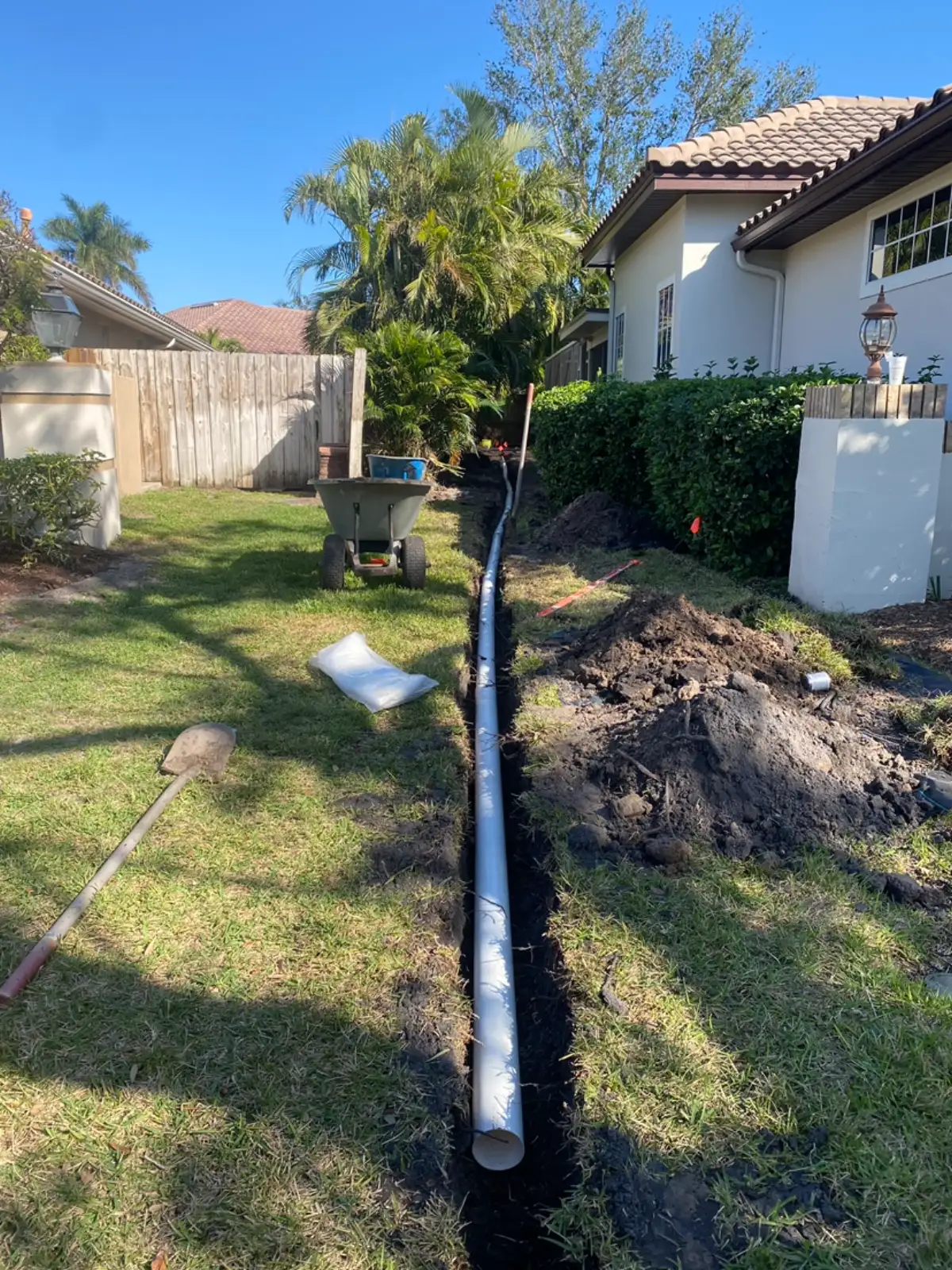
Irrigation Installation
Smart irrigation systems that match water delivery to each plant zone. New installs starting at $2,500 with WiFi controllers and rain sensors.
Learn More →